Nahleh team, reviewed content · Published 16 September 2026 · Updated 20 September 2026
A bunion (hallux valgus) is when the big toe leans toward the other toes, with a bony bump on the side of the foot. It develops gradually because of inherited foot shape and tight shoes. It causes pain, redness and difficulty wearing shoes — and with consistent use of the right corrector, the big toe gradually moves back toward its proper position, especially in mild to moderate cases.
What exactly is a bunion?
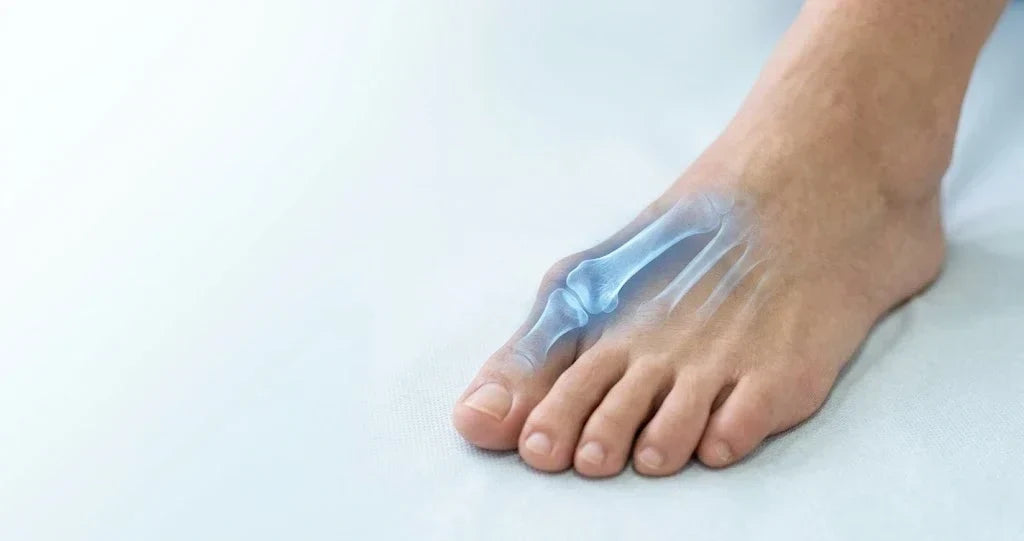
The joint at the base of the big toe (the first metatarsophalangeal joint) is where the foot bone meets the toe bone. Normally this joint stays in a roughly straight line with the rest of the foot. With a bunion, the first metatarsal starts to angle inward while the big toe leans outward toward the other toes. The result is an abnormal angle at the joint, and the bone on the inner side becomes a visible bump you can feel under the skin.
That bump isn't an extra growth of bone like a lump — it's simply the metatarsal itself, sticking out at a different angle from normal. Over time, repeated rubbing against shoes thickens the skin and tissue over the bump and sometimes inflames the small fluid sac that protects the joint.
What causes it?
Genetics has the biggest effect. If your mother or grandmother had a bunion, you are noticeably more likely to get one, because foot shape and ligament flexibility are inherited.
Unsuitable shoes — especially ones that are narrow at the front or have high heels — don't cause a bunion from nothing, but they speed it up a lot in someone who is prone to it. High heels in particular shift your body weight onto the front of the foot and squeeze the toes into a narrow space.
Flat feet are an important contributing factor: when the arch collapses, pressure across the front of the foot is redistributed in a way that loads the big-toe joint in particular. Think you might have flat feet? Find out with a simple footprint test.
Other factors include standing for long periods, pregnancy (because of the hormone relaxin), getting older, and some kinds of rheumatoid arthritis.
How do you know if you have one? Degrees of severity
The basic check is simple: look at your foot while standing with your normal weight on it. If you see a clear bump at the side of the base of the big toe, or notice the toe starting to lean toward the others, that's a sign of a bunion. This table helps you roughly estimate how severe it is:
| Degree | What it looks like | Symptoms |
|---|---|---|
| Mild | Small bump, slight lean of less than 15 degrees | Often painless, light rubbing in tight shoes |
| Moderate | Clear bump, lean of 15–30 degrees | Pain on and off, redness after tight shoes |
| Severe | Large bump, lean of more than 30 degrees | Constant pain, even in wide shoes |
If yours is mild to moderate, this is the ideal time to act — before the bunion develops further.
What are the options?
Dealing with a bunion always starts with the simplest options before anything more invasive:
- Changing shoes: wide at the front, heels under 3 cm, flexible materials
- Correctors: hold the big toe in a more natural position and reduce rubbing and pressure on the joint
- Exercises: strengthen the small muscles of the foot and improve joint flexibility
- Adjusting activity: less continuous standing, regular rest breaks
- Surgery: a last resort for severe cases that don't respond to other options
Can it be corrected without surgery?
Yes. With consistent use of a corrector, the big toe gradually moves back toward its proper position — as Nahleh customers who wear one regularly have found. How much it improves depends on two things: how severe the bunion is (mild and moderate cases respond more clearly) and consistency (wearing it on and off gives a much weaker result than daily use). In very severe cases the improvement may be partial rather than complete, and that's when surgery becomes worth discussing with a specialist.
How Nahleh's corrector helps
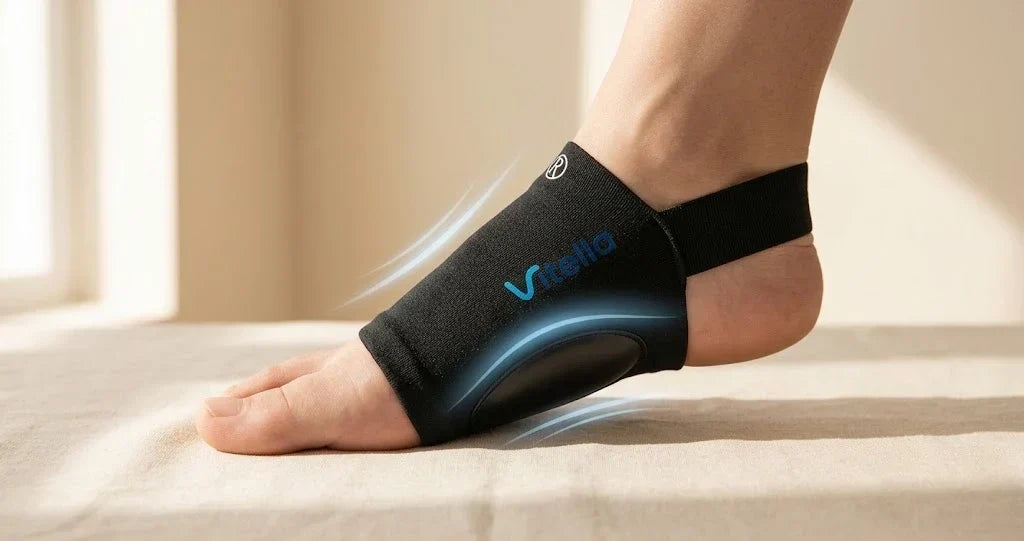
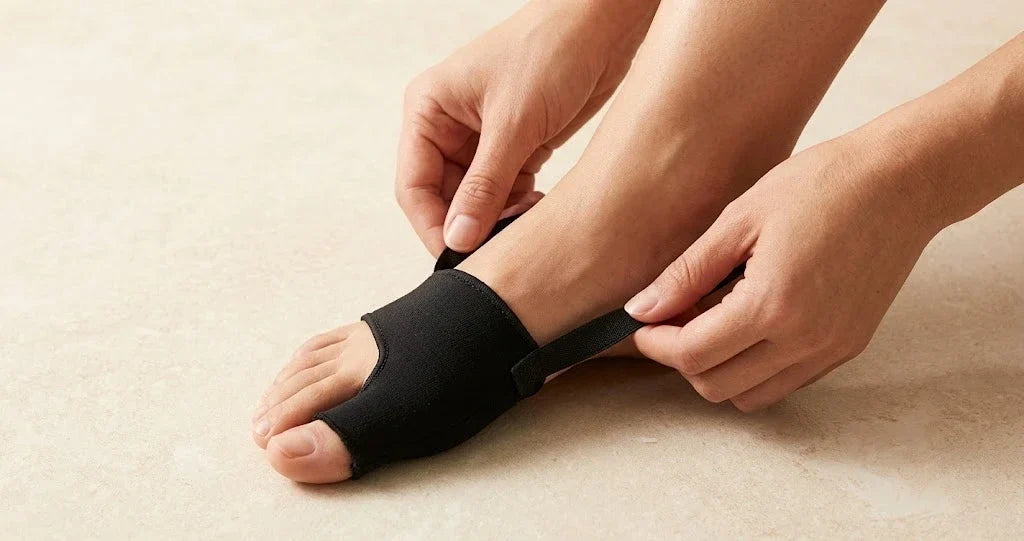
The Vitella bunion corrector holds the big toe at an angle closer to natural alignment and reduces direct rubbing between the bump and your shoe. It's worn inside your shoe all day, so it suits anyone who wants everyday comfort while carrying on as normal. For more intensive, gradual correction while resting and sleeping, there's also the home corrector with a firmer hold. See our full comparison of the two to choose the right one.
Frequently asked questions
Does a bunion go away on its own?
No. Without intervention it usually stays the same or slowly gets worse. With the right corrector worn every day, the big toe gradually moves back toward its proper position — but that improvement takes real effort; it doesn't happen by itself.
What's the difference between a bunion and a corn?
A bunion is a problem of the bone and joint itself, while a corn is a hardened patch of skin caused by friction. They are two completely different conditions with different treatments.
Is it hereditary?
Yes, genetics is one of the strongest risk factors. If a parent or grandparent has it, you are more likely to develop it too.
How long until I see a difference?
With regular use, most people feel more comfortable within one to two weeks. Slowing the bunion itself takes consistent use over months.
Try the Vitella bunion corrector, JD 15.000 · Delivered in 1–2 days across Jordan · cash on delivery · rated 4.9 by 1,579 customers. Browse all of Nahleh's mobility care products.
This content is general education and is not a substitute for advice from a specialist doctor. If the pain is severe or constant, or the deformity is getting worse quickly, see a foot and ankle surgeon.