Nahleh team, reviewed content
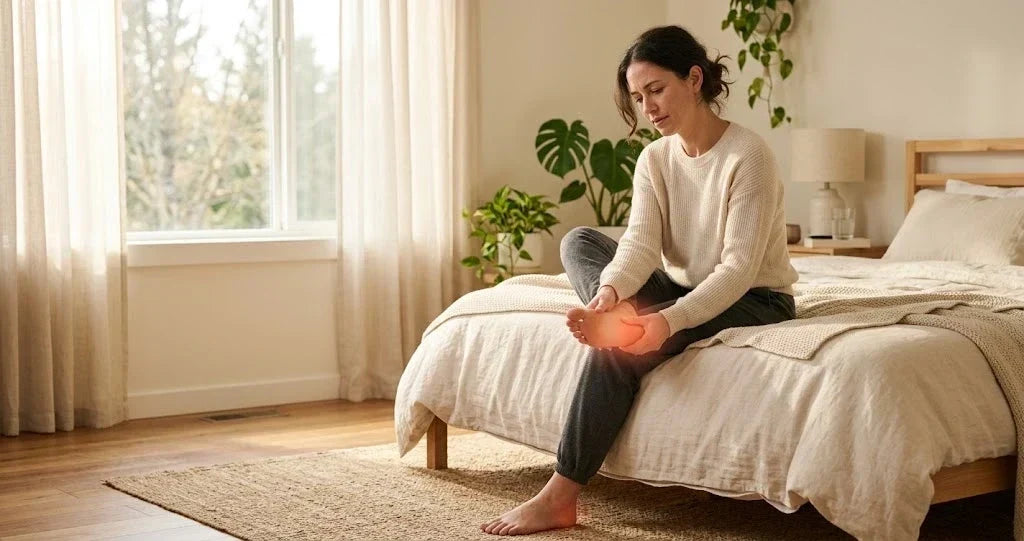
A sharp pain in the heel with your first steps in the morning is the classic sign of plantar fasciitis. The fascia tightens while you sleep, so the first weight on it causes a painful pull that eases after a few steps. The three most important steps: stretches before you get out of bed, shoes with enough support, and an arch support that takes the strain off the fascia all day.
Many people describe it the same way: "The moment I put my foot on the floor in the morning it's like there's a nail in my heel, and after a while it eases." In Jordan many people simply call it "the spur" and look for a foot brace or a heel support. In this article we explain what is really happening, the difference between inflammation and a heel spur, and a simple morning routine that makes a difference from the first week.
Why does it hurt in the morning in particular?
The plantar fascia is a strong fibrous band that runs from the heel to the base of the toes and supports the arch of the foot. When it's inflamed, during the hours of sleep the foot rests in a slightly contracted position, so the fascia shortens and stiffens. As soon as you stand up, all your weight lands on it at once and pulls it tight — and that's where the sharp pain comes from, at the point where it attaches to the heel.
After a few steps the fascia warms up and stretches, so the pain eases. The same thing can happen after sitting for a long time, such as getting up from your chair after an hour of work or after a drive.
The difference between plantar fasciitis and a heel spur
| Plantar fasciitis | Heel spur | |
|---|---|---|
| What it is | Inflammation and strain of the fibrous band under the foot | A small bony growth on the heel bone |
| Does it cause pain? | Yes, it's the main source of the pain | On its own, usually not — many people have a spur with no pain |
| How it's found | From the symptoms and an examination | On an X-ray |
| How they're linked | Long-term strain on the heel can, over time, lead to a spur forming | Usually a result, not a cause |
| What to do | Stretching, arch support, rest from extra load | The same, because the real problem is in the fascia |
The bottom line: if an X-ray shows a spur, that doesn't mean it's the cause of your pain. In most cases, dealing with the fascia itself is what eases the pain.
The link with flat feet
When the arch of the foot is low (flat feet), the arch collapses more with every step, so the plantar fascia is pulled tighter than normal thousands of times a day. Over time this repeated strain causes stress and inflammation at the heel. That's why morning heel pain is very common in people with flat feet, in people who stand for long hours at work, and with weight gain. Read more in our complete guide to flat feet.
A 5-minute morning routine
Do it while you're still in bed, before you put your feet on the floor:
- Calf stretch with a towel (1 minute): sit with your leg straight, loop a towel around the front of your foot and pull it toward you until you feel a stretch behind your calf. Hold for 30 seconds, twice on each leg.
- Toe pull (1 minute): cross one leg over the other, hold your toes and pull them back toward your shin. You should feel a stretch under your foot. Hold for 15 seconds, 3 times.
- Ankle circles (1 minute): turn your foot in a circle 10 times in each direction.
- Toe movements (1 minute): curl your toes and spread them 15 times.
- First steps in shoes (1 minute): keep supportive shoes or slippers next to your bed, and don't walk barefoot on a cold tiled floor first thing in the morning.
And in the evening: roll your foot over a frozen water bottle wrapped in a towel for 5 minutes. The cold together with the massage eases inflammation after a long day.
Support through the day
The morning routine eases the first pain, but what decides whether the inflammation settles is what happens to your foot for the rest of the day. Three habits make a difference:
- Shoes with arch support and a shock-absorbing sole — avoid completely flat shoes for a while.
- An arch support during your hours of standing and walking, to take the strain off the fascia. We explain how the support works and when to use it.
- Reducing the load: change your standing position every 20 minutes, and cut down long walks on hard ground until the pain settles.
When do you need a doctor?
Most cases of morning heel pain improve with home care within weeks to months. See a doctor if:
- The pain continues or gets worse for more than 6 weeks despite the routine and support.
- There's severe pain at night or at rest, not only with the first steps.
- There's tingling or numbness in the foot.
- There's obvious swelling, redness or heat in the heel.
- The pain started after a fall or an injury.
- You can't put any weight on the foot at all.
How Nahleh's support helps
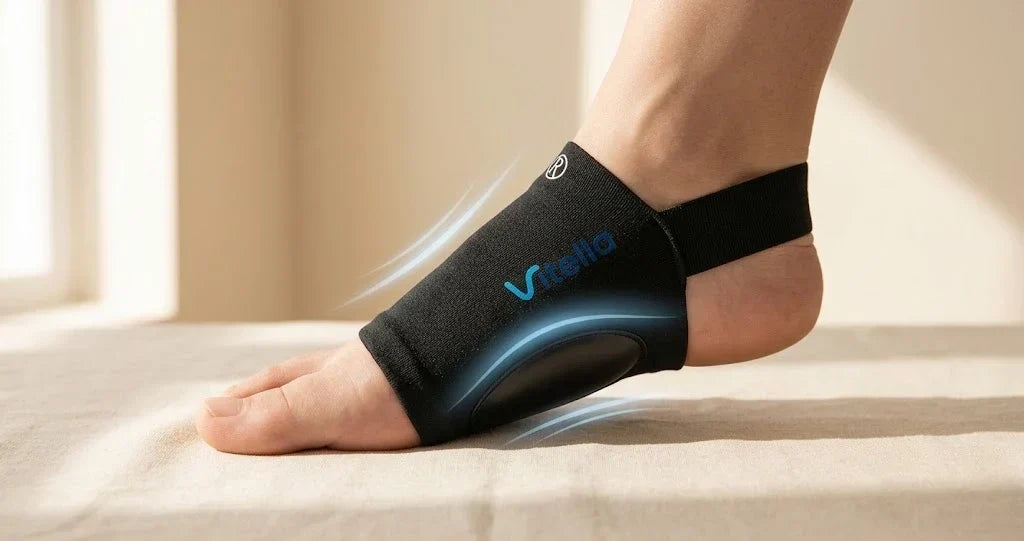
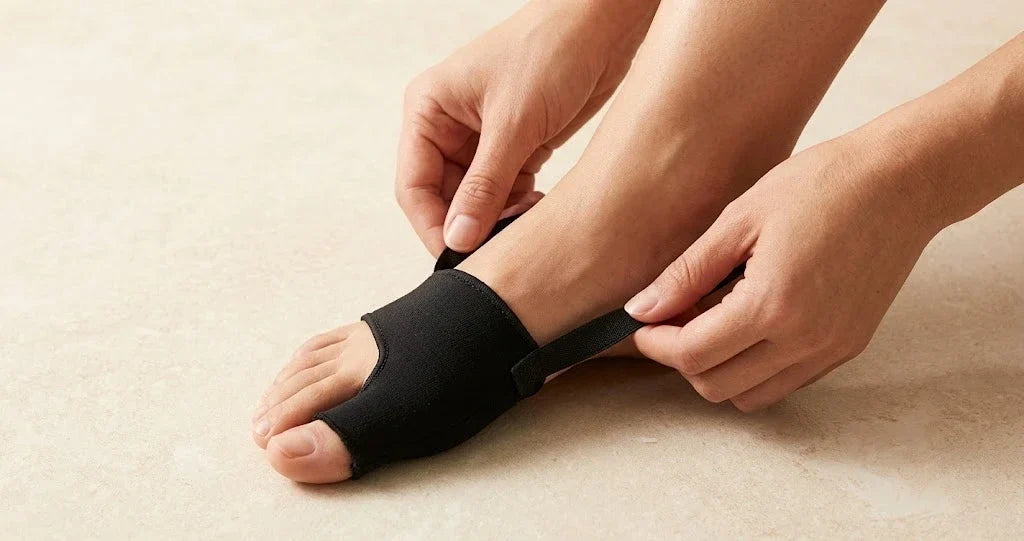
The Vitella arch support sleeve supports the arch with a hydrogel cushion, so the foot collapses less with every step and the repeated strain on the plantar fascia eases through the day. It's slim and fits work shoes and formal shoes, so you can wear it during the hours when your feet actually get tired. It comes as a pair for JD 15.000, and for the clearest result it's best combined with the morning routine.
Frequently asked questions
How long does it take to get better?
Most people notice an improvement within weeks of daily stretching and the right support, and full recovery can take from several months to a year. Sticking to the routine every day is what speeds up improvement the most.
Does ice help?
Yes, cold eases inflammation and pain, especially at the end of the day. Roll your foot over a frozen water bottle wrapped in a towel for 5 to 10 minutes, and don't put ice directly on your skin.
Can I walk on it?
Yes, normal walking does no harm, but in supportive shoes and without overdoing it. Cut down long distances and walking on hard ground until the pain settles, and avoid walking barefoot, especially in the morning.
Does a heel spur go away?
The bony growth itself usually doesn't disappear, but that isn't a problem because it's usually not the cause of the pain. When the plantar fascia settles with stretching and support, the pain eases even if the spur still shows on the X-ray.
Where can I find a support for heel pain in Jordan?
The Vitella arch support sleeve is available in Jordan from Nahleh (nahleh.net) for JD 15.000 a pair, delivered within 1–2 days, paying cash on delivery. It fits work shoes and formal shoes.
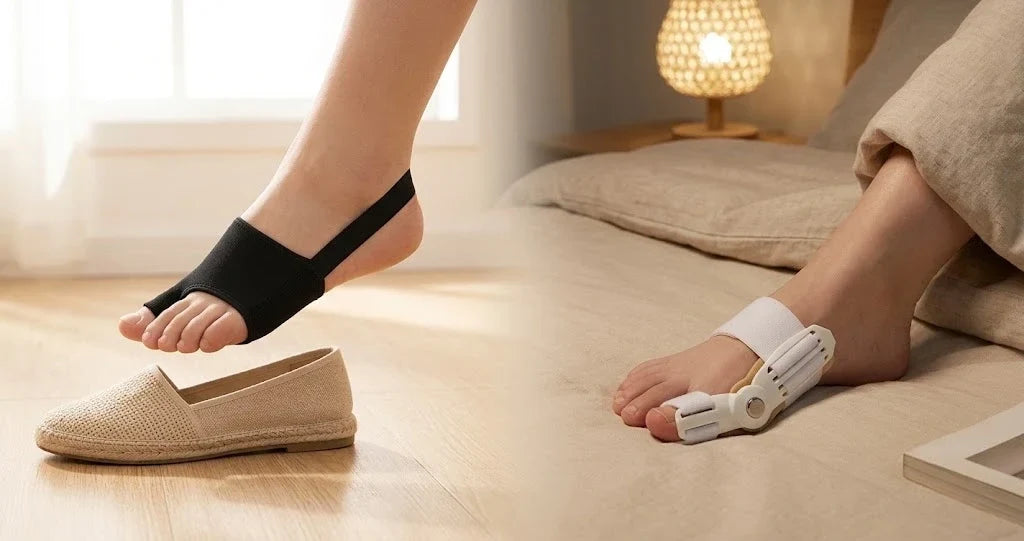
Try the Vitella arch support sleeve, JD 15.000 a pair · rated 4.8 by 1,365 customers · Delivered in 1–2 days across Jordan (delivery JD 2 in Amman, JD 3 to other governorates) · cash on delivery. Browse all of Nahleh's mobility care products. And if your big toe hurts too after walking, see our complete guide to bunions.
This content is general education and is not a substitute for advice from a specialist doctor.