Nahleh team, reviewed content
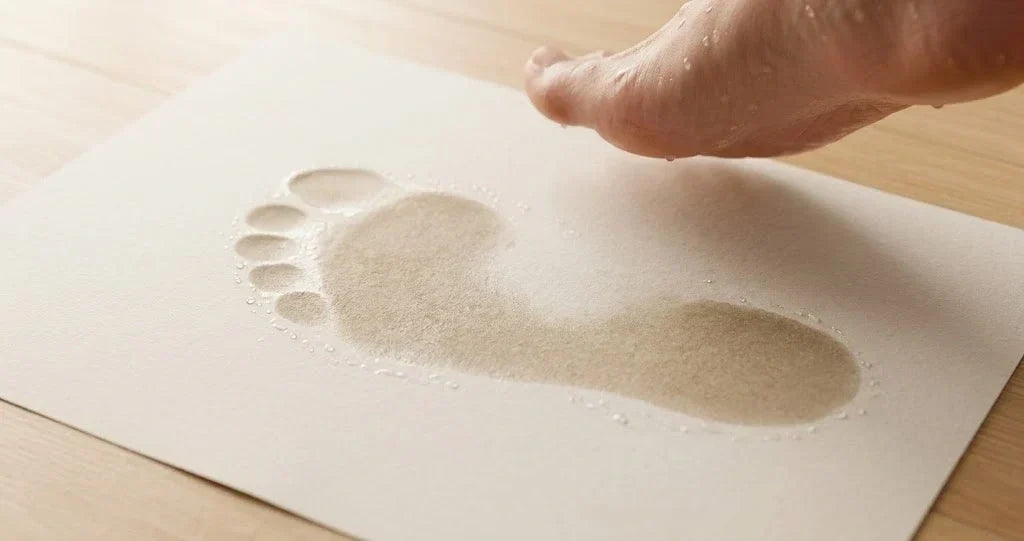
The footprint test is the easiest way: wet your foot, stand on a sheet of dark card and look at the print. If the whole footprint shows with no inward curve, you have flat feet (also called fallen arches). If a thin strip connects the heel to the front of the foot, your arch is normal. Repeat the test while standing with your full weight for the most accurate result.
The footprint test, step by step
- Put a sheet of dark card or ordinary paper on a flat floor
- Wet the sole of your foot with water (enough to leave a clear print)
- Stand on the paper naturally, with your full weight spread across both feet
- Step off carefully and look at the print
- Repeat for the other foot — sometimes the two feet differ
The tiptoe test
A simple extra check: stand on tiptoe and see whether the arch appears more clearly. If the arch shows clearly when you lift your heel, your flat feet are flexible rather than rigid.
The old-shoe test
Look at the wear pattern on the sole of a pair of shoes you wear often. If the wear is concentrated on the inner edge of the sole, that's another sign of flat feet, or of your weight rolling inward as you walk.
Reading your result
| What the print looks like | What it means |
|---|---|
| A full print with no curve, about the same width all the way | Clear flat feet |
| A very thin strip joining the heel and the front | A very high arch (the opposite) |
| A clear curve on the inner side, medium width | A normal arch |
| A full print under full weight, but an arch appears when you lift your heel | Flexible flat feet |
When to see a doctor
The footprint test is a useful first check, but it isn't a substitute for a medical assessment. See a specialist if you have constant or worsening pain in the foot or heel, notice a big difference between your two feet, have unexplained swelling, or if a child still has flat feet after the age of 8 and complains of pain.
Frequently asked questions
Is the test accurate?
It's a good first check to do at home, but it isn't a substitute for a proper clinical examination. It gives you a clear enough idea to decide whether you need a support or further advice.
Does it work for children?
Yes, but remember that flat feet are normal in young children under 3–4 years old, and the arch develops gradually.
What if the result is in between?
Repeat the test two or three times at different times of day and compare both feet. If it still isn't clear, the best next step is to see a specialist for a more accurate assessment.
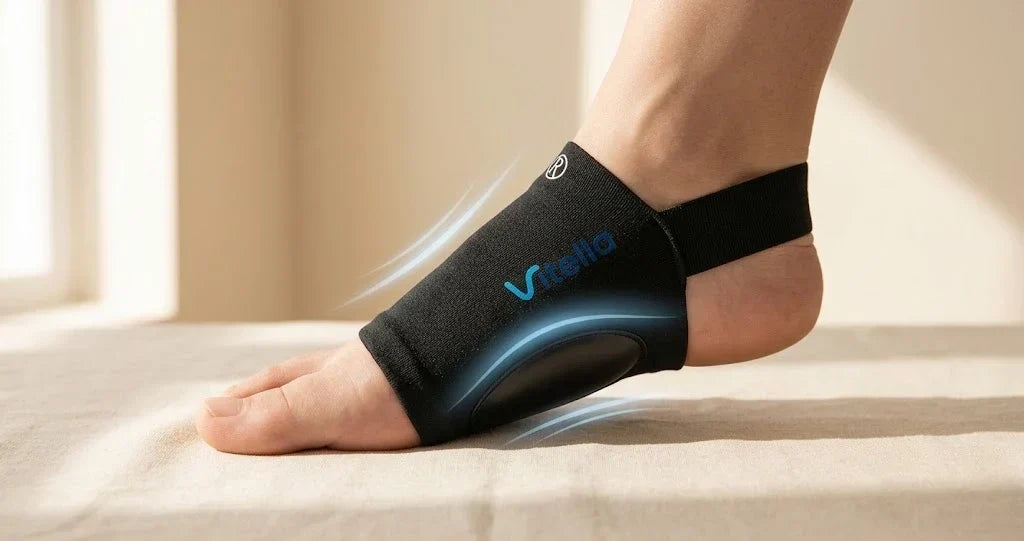
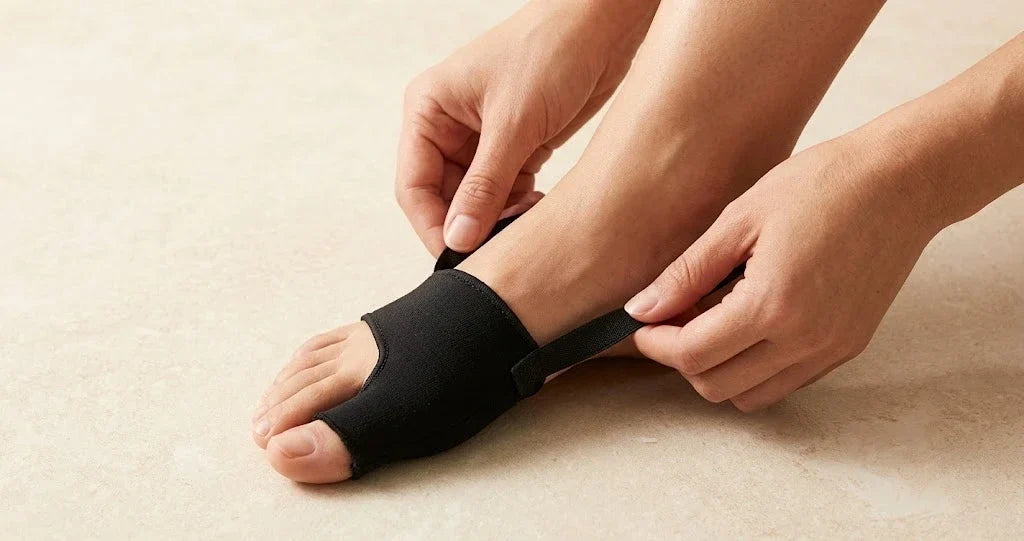
If the test confirms flat feet, try the Vitella arch support sleeve, JD 15.000 · Delivered in 1–2 days across Jordan · cash on delivery · rated 4.8 by 1,365 customers. See also our complete guide to flat feet. Browse all of Nahleh's mobility care products.
This content is general education and is not a substitute for a specialist doctor's diagnosis.