Nahleh team, reviewed content
A bunion (hallux valgus) is a problem of the bone and joint: the big toe leans toward the other toes and a bony bump appears on the side of the foot. A corn is only hardened skin, formed by repeated rubbing. When a corn forms right on top of a bunion because of that rubbing, a bunion corrector treats the source of the friction and helps reduce and prevent it.
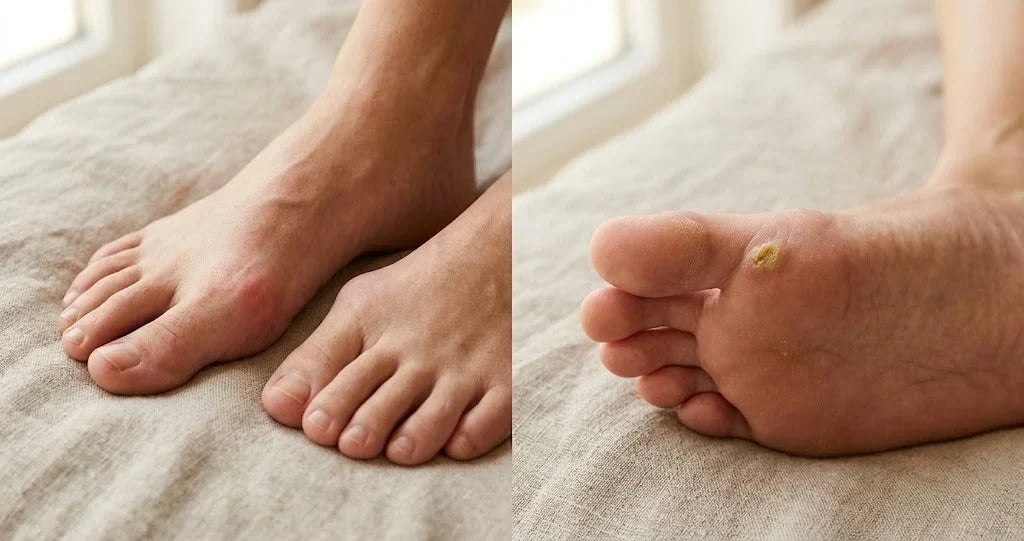
Side-by-side comparison
| Bunion (hallux valgus) | Corn | |
|---|---|---|
| Affected tissue | Bone and joint | Surface skin only |
| Look | A smooth, rounded bump under the skin — part of the bone itself | A small, hard, thickened spot |
| Where | Side of the foot at the base of the big toe | Anywhere the foot rubs |
| Cause | Misaligned joint angle, often inherited | Repeated, direct rubbing against the shoe |
| Nahleh product | ✅ Bunion corrector | ⚠️ Only if it sits on top of the bunion |
How to check yourself at home
Look at the area while standing: if the bump is part of the bone's shape, smooth to the touch, and the toe is clearly leaning toward the others, that's a bunion. If it's a small, hard, thickened spot and the toe itself is in its normal position, that's a corn.
The quickest check: press gently on the area. A bunion gives a deep ache in the joint, while a corn feels like surface pressure on one precise point.
Why are they so often confused?
Mainly because both usually appear in the same place — tight shoes cause both. Many women have a bunion and, at the same time, a corn on top of the bony bump from the extra rubbing the bump itself creates.
They can happen together — and that's exactly where the corrector helps
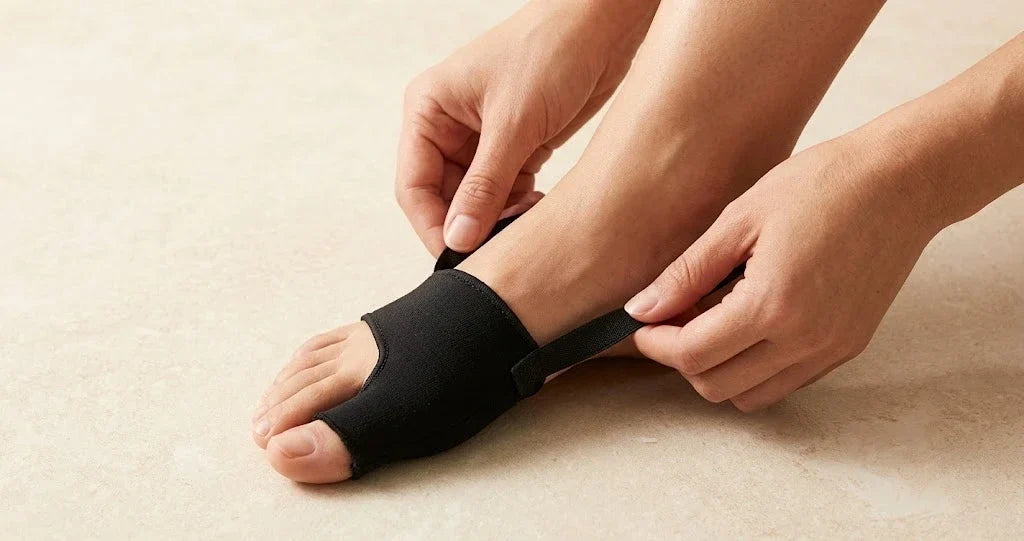
Yes, and it's actually common. The bony bump from a bunion increases rubbing against the shoe or the next toe in that exact spot, which is the perfect setting for a corn to form on top of it. A bunion corrector separates the big toe from its neighbour and shields it from the shoe — exactly the friction that creates this kind of corn. So in this case the corrector doesn't just ease the rubbing; it treats the direct cause of the corn at that spot.
What you need for each case
- A bunion only, with no corn: a bunion corrector is the right solution — it steadies the toe and reduces rubbing and pressure
- A corn right on top of the bunion, caused by the toe rubbing the shoe or the next toe: the corrector treats the friction itself, helps reduce the corn and stops it coming back
- A corn somewhere else on the foot (heel, sole, between other toes) unrelated to a bunion: that's outside what our products do and needs separate skin care
- Both, in two different places: the corrector treats the bunion and any corn it causes, while the unrelated corn needs its own skin treatment alongside
Frequently asked questions
Can I have both?
Yes, it's common — when the bony bump from the bunion is itself what rubs and forms the corn on top of it.
Does the corrector help with a corn?
Yes, if the corn has formed right on top of the bunion because it rubs against the shoe or the next toe: the corrector separates the big toe and reduces exactly that friction. If the corn is somewhere else on the foot and unrelated to the bunion, the corrector won't affect it.
How can I tell the difference myself?
Check the feel and shape: a smooth bump that is part of the bone is a bunion; a small, hard, thickened spot is a corn.
Which one needs a doctor?
Both can benefit from medical advice if the pain is severe or constant. If the bunion is getting worse quickly or the deformity is obvious, seeing a foot and ankle surgeon matters more.
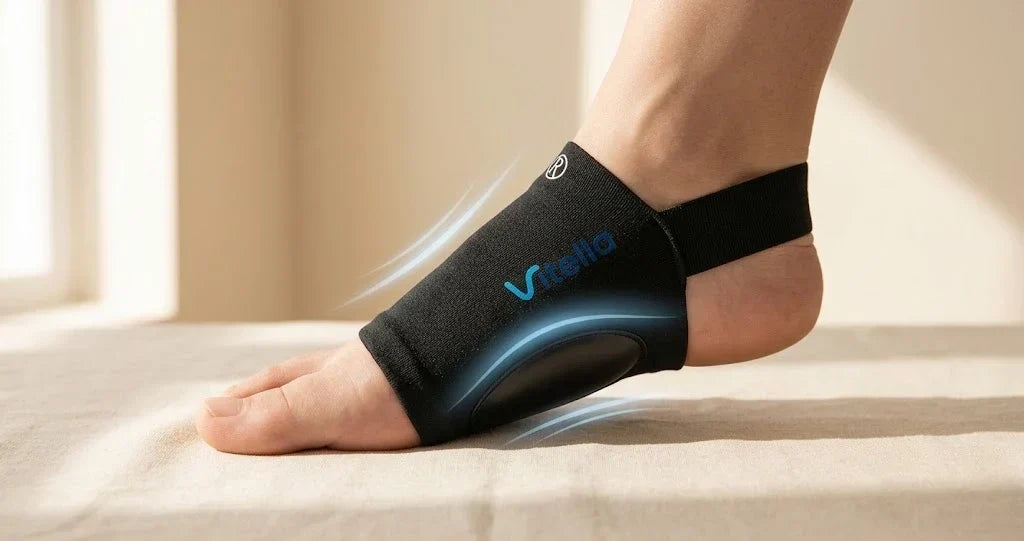
Try the Vitella bunion corrector, JD 15.000 · Delivered in 1–2 days across Jordan · cash on delivery. See also our complete guide to bunions. Browse all of Nahleh's mobility care products.
This content is general education and is not a substitute for a specialist doctor's diagnosis.