Nahleh team, reviewed content
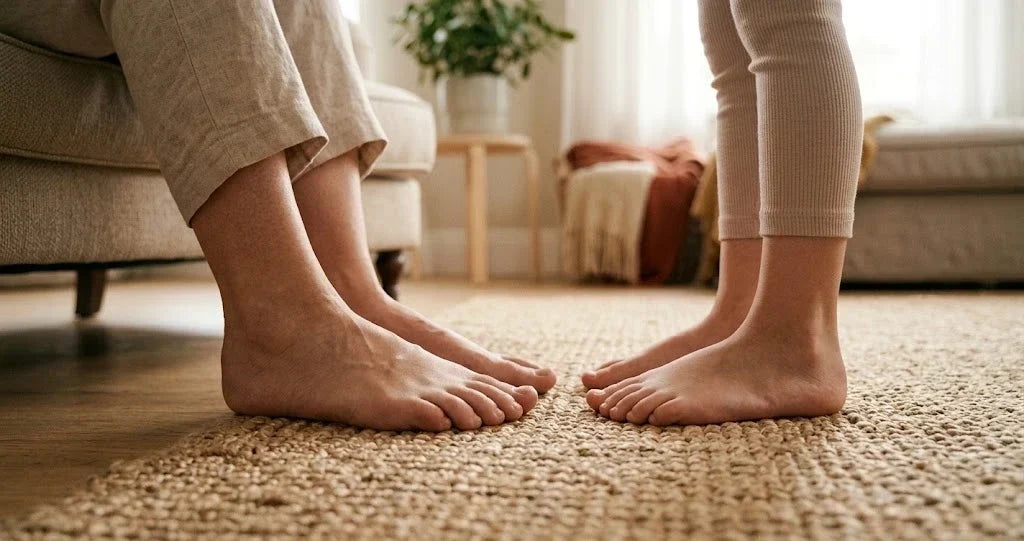
Flat feet mean the natural arch under the foot is lowered or missing — also called fallen arches. The whole sole touches the ground. It can be inherited or develop with age, weight and long hours of standing. Many people have no symptoms at all; when the heel, foot or back does hurt, an arch support provides an artificial arch and takes the load off the ligaments.
What exactly are flat feet?
A normal sole has an arch that rises off the ground between the heel and the front of the foot, made of bones, joints and flexible ligaments. This arch works as a shock absorber and spreads your weight evenly as you walk and stand. With flat feet the arch drops partly or disappears completely, so the whole sole touches the ground.
Types
Flexible flat feet: the arch appears when the foot is off the ground and disappears when you stand with your full weight. This is the most common type and usually has no symptoms.
Rigid flat feet: the arch is missing even without weight on it, usually linked to structural problems in the foot bones from birth or development.
Acquired flat feet: these develop in adulthood because the tendons supporting the arch weaken, often linked to extra weight or repeated injuries.
Causes
An inherited foot shape and ligament flexibility; extra weight that increases the load on the arch; repeated long periods of standing or walking; muscles and tendons of the foot weakening with age; and pregnancy, whose hormonal changes temporarily make ligaments more flexible.
Symptoms
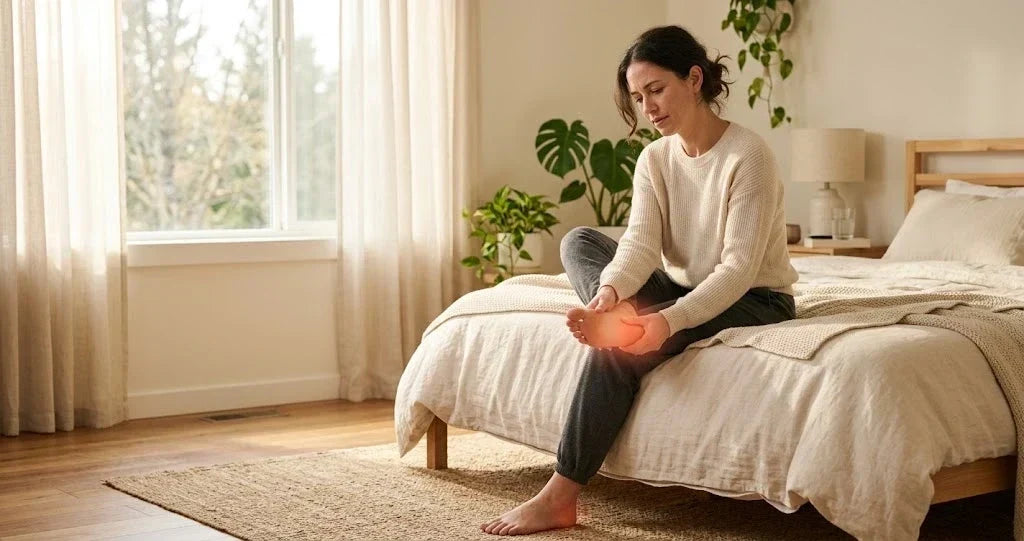
Many people with flat feet have no symptoms and need no treatment. When there are symptoms, they include: feet tiring quickly after relatively short standing or walking, pain in the sole or heel, mild swelling after long activity, and sometimes pain that spreads to the knee or lower back as leg alignment changes.
Checking at home
The simplest way is the footprint test: wet your foot, stand on a dark surface and look at the shape of the print. We explain the full method step by step in a separate article.
What helps
If you have no symptoms, there's usually no need to do anything. If there is pain or tiredness:
- An arch support: provides an artificial arch and spreads the pressure again
- Shoes with proper built-in support: reduce the extra load on the ligaments
- Strengthening exercises: build up the small muscles that support the arch
- Managing weight: lowers the total load on the feet
How Nahleh's support helps
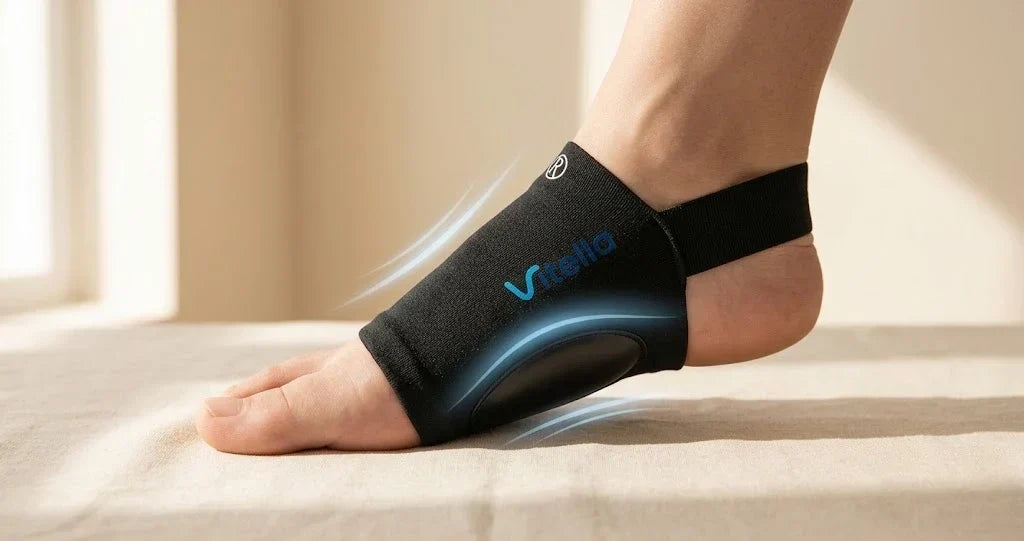
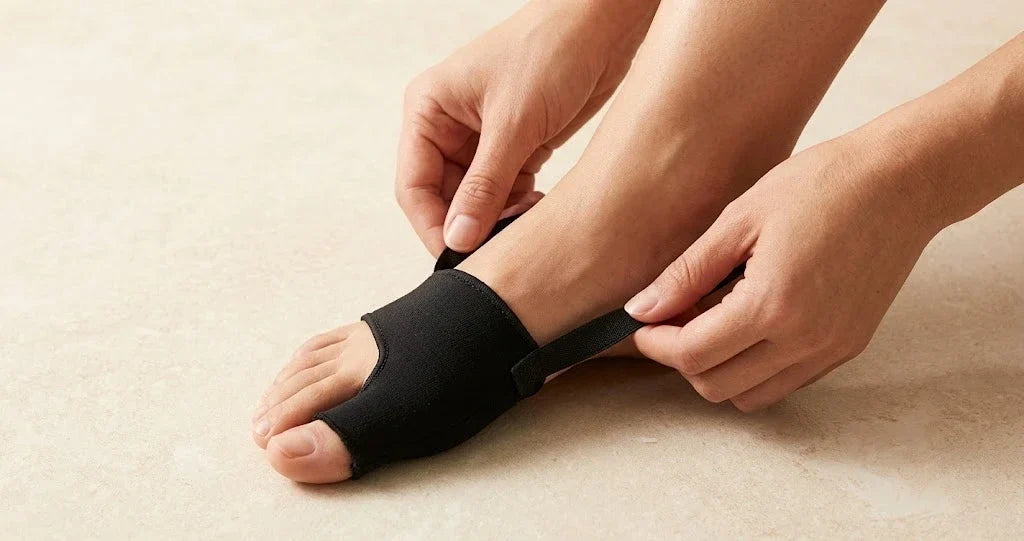
The Vitella arch support sleeve wraps around the middle of the foot and lifts the arch from inside, moving pressure away from the heel and the front of the foot. It eases strain on the plantar fascia and reduces tiredness from long standing, and it can be worn with or without socks, inside most shoes.
Frequently asked questions
Can it be cured completely?
Hereditary or rigid flat feet usually don't change shape, but the symptoms that come with them, such as pain and tiredness, improve a lot with the right support and exercises.
Does it stop me doing sport?
No, but it raises the risk of some injuries if you play without proper support. The right support and shoes let you do most sports safely.
Can it cause back pain?
It can be linked. When the arch collapses, the alignment of the leg, knee and hips changes, which can contribute to lower back pain for some people.
Is it hereditary?
Largely, yes — the shape of the foot bones and the flexibility of the ligaments are inherited, though acquired factors such as weight and age also play a part.
Try the Vitella arch support sleeve, JD 15.000 · Delivered in 1–2 days across Jordan · cash on delivery · rated 4.8 by 1,365 customers. Browse all of Nahleh's mobility care products.
This content is general education and is not a substitute for advice from a specialist doctor.